Being a Better Tennis Parent Part 1: Introduction

Part 1: Introduction
Research has shown that tennis is one of the healthiest, least injurious sports youngsters can play. Tennis is a lifetime sport. It builds self-confidence and self-esteem. It teaches self-discipline, self-reliance and respect for others. But, above all, it provides a good way of performing physical exercise whilst having fun. Today, more children than ever before are taking part in tennis.
However, there’s a big difference between learning the basic strokes to play the game at recreational level, and competing successfully at a high level.
Individual competitive sports like tennis usually teach the youngsters to work hard, to learn to manage stress, to perform under pressure, and test emotional and physical balance. However, they can also impose pressures which are damaging if handled wrongly. Sometimes competitive junior tennis can be especially difficult for both parents and children because there are many factors which affect this competitive environment which are usually new for everybody.

Family Playing Football In Garden Together
For parents, competitive tennis can become a complex experience, especially if they themselves have not played at a competitive level before. For youngsters, problems occur because too often, the demands that competitive tennis place on them seem to lie beyond their control and abilities. You, as a parent, want to help your child to manage this new situation, as you do in other aspects of your child’s life: school, friends, family, etc. You want your child to be happy, to have fun and to learn to play tennis to a reasonable level. No doubt that’s why you encouraged them to be involved in the sport in the first place. You know that it is not easy to be a good parent and, it is even harder to be a good parent of a tennis player. To know what is best to do to help your child and also when and where to do it, is not easy.
There are a lot of questions to ask but it is difficult to know who to ask and for the most part, there are no clear answers or guidelines to follow. Many problems occur because parents are unsure as to how they can best help their child and so use their natural instincts. In doing this, they go wrong far more often than they go right.
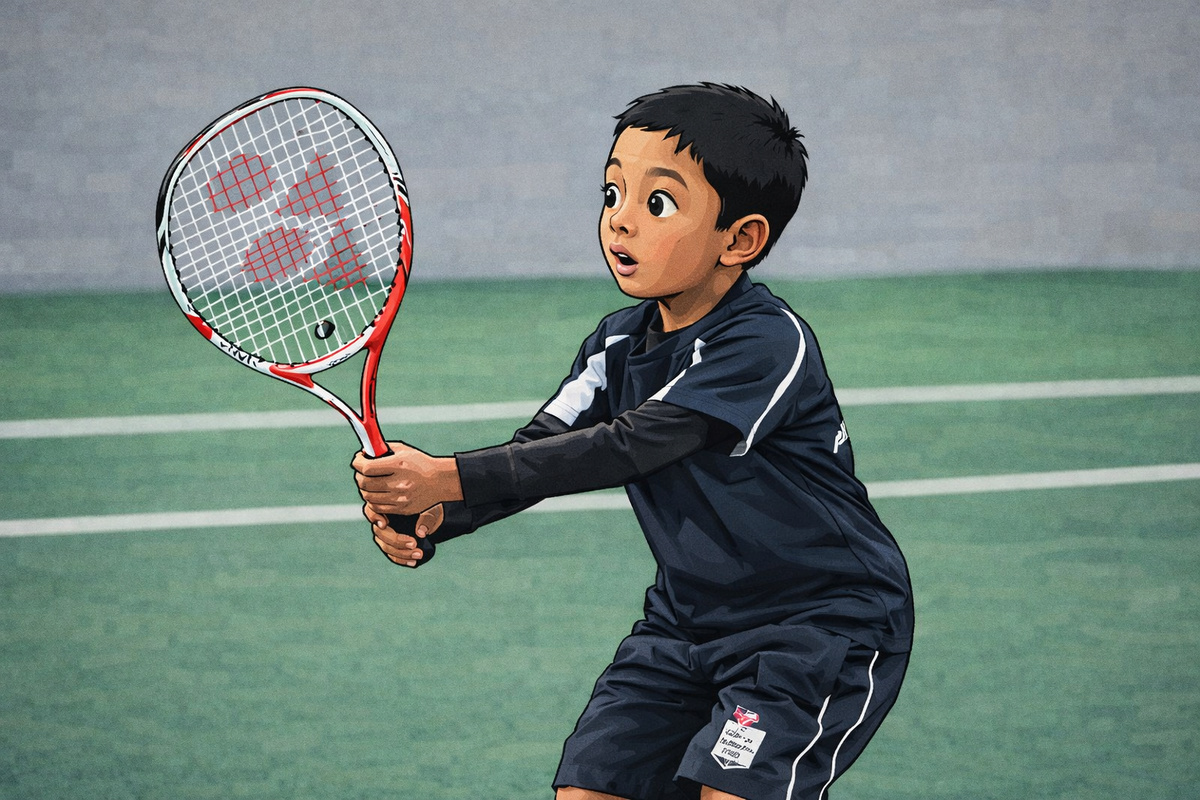 Interestingly enough, research has shown that the support and interest of the parents is crucial to the child’s continued participation in tennis. However, it has also shown that much of the physical and emotional stress affecting the games of junior tennis players is caused by their parents. The consequences of excessive stress in junior competitive tennis are uniformly negative and often lead to burnout. Moreover, if parents put unnecessary pressure on their child, this also can damage their parent/child relationship. The reality is that parents have a very important role to play in their child’s tennis activity, whatever the level of participation. Parents need, however, to be trained and prepared for the role they have to play in this team.
Hence the reason for this series which has been written to help you, the parent, to perform better within the highly complex and sometimes, confusing world of competitive tennis. It is written to inform and to provide guidelines on how to best help your child so as to ensure that you, as well as your child, enjoy your involvement in tennis. We hope that you find the information useful in your tennis parent role wherever in the world it may be.
Recent Comments